


Key Takeaways
- A crane setup should be planned around the facility’s actual layout, including ceiling height, column spacing, loading points, and access routes
- Clear load routes help reduce unnecessary handling, repeated repositioning, and delays between key operating areas.
- Different work zones may require different crane configurations, depending on whether the task needs broad coverage, localised lifting, or fixed-path movement.
- Proper crane planning supports safer load control, smoother handovers, and more efficient daily operations in Singapore industrial facilities.
Introduction
Heavy loads need clear, controlled movement across an industrial facility. When equipment, parts, and finished goods do not move efficiently, teams may face repeated handling, longer waiting times, crowded work areas, and more difficult load control. This is why material flowmatters in factories, warehouses, and workshops where lifting work happens daily.
A custom crane system helps industrial facilities move heavy loads more efficiently by aligning lifting coverage with the actual site layout, work zones, load routes, and production sequence. For Singapore businesses operating within compact or fixed industrial spaces, the right crane design can reduce unnecessary handling, improve control, and support safer movement between key operating areas.
What Material Flow Means in Factories, Warehouses, and Workshops
Material flowrefers to how materials, equipment, parts, and finished goods move through a facility. In industrial worksites, this movement affects safety, productivity, space usage, and how smoothly teams can complete each stage of work. A well-planned setup helps reduce delays between processes and prevents heavy loads from occupying temporary holding areas longer than necessary.
In factories, this may involve movement between machining, fabrication, assembly, inspection, and storage zones. In warehouses, it may involve receiving, storage, packing, and dispatch areas. In workshops, it may involve moving heavy items around fixed machines, work bays, or repair stations. When each movement point is planned clearly, operators can move loads with fewer interruptions.
Why Site Layout Affects Crane System Design
Every facility has different physical limits. Ceiling height, column spacing, floor area, machinery placement, loading points, access routes, and structural conditions all affect how a crane system should be planned. A crane that works well in one facility may not provide the right coverage in another if the layout, lifting height, or load path is different.
A custom liftingsystemallows the crane design to be matched to the site’s actual conditions. This is especially important in Singapore facilities where industrial floor space may be compact, fixed, or difficult to reorganise. Instead of forcing workers to move loads towards the crane, the crane system can be planned around the areas where lifting support is actually needed.
How Load Routes Shape Better Lifting Coverage
Load routes show where materials are picked up, moved, and placed down. When these routes are not considered during crane planning, operators may need extra handling steps, repeated repositioning, or awkward transfers between work areas. These small inefficiencies can build up across daily operations, especially when heavy loads move frequently.
A custom crane system can support better material flow by providing suitable coverage across the most important load routes. With suitable span, travel direction, and hoist positioning, loads can move more directly between storage, production, assembly, and dispatch points. This keeps each lift closer to its intended pickup and placement path, reducing the need for temporary staging or unnecessary detours across the work area.
How Work Zones Influence the Right Crane Configuration
Different work zones require different lifting approaches. A production line may need repeated movement along a fixed path, while a workshop may need localised lifting near a machine or workstation. A warehouse or loading area may need broader coverage across a wider operating space. The right configuration should therefore reflect how each zone functions, not only the maximum load that needs to be lifted.
Matching Crane Types to Work Zones
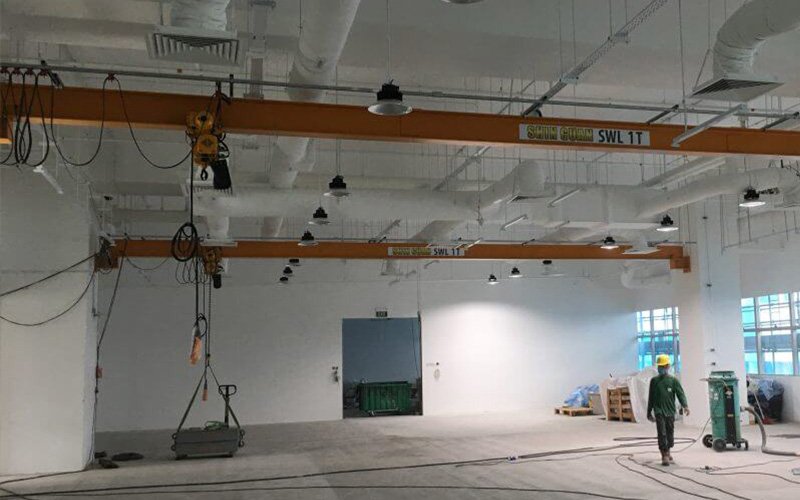
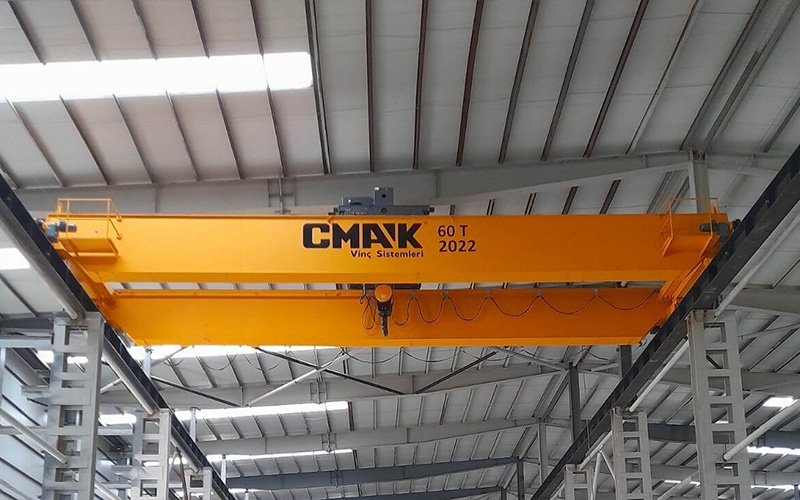
Each crane type supports a different movement pattern, so the selection should follow the actual lifting task within the work zone. An overhead crane may suit facilities that need wide indoor coverage while keeping the floor area clear. A jib crane may support localised lifting at a workstation, machine, or repair bay. A monorail system may suit fixed travel paths between defined points, while hoists can serve repeated lifting needs at specific areas.
This practical matching supports more efficient industrial material handling because the crane is configured around the way operators already work. It also reduces the risk of overbuilding in areas that only need local lifting or under-equipping zones that require wider coverage. When the configuration fits the work zone, operators can move heavy loads with better control and fewer unnecessary steps.
How Crane Span and Travel Direction Improve Material Movement
Crane span affects how much working area the crane can cover. Travel direction affects how naturally loads move through the facility. If the span is too limited, workers may still need to reposition materials before lifting. If the travel direction does not match the operating route, the crane may create extra steps instead of improving movement.
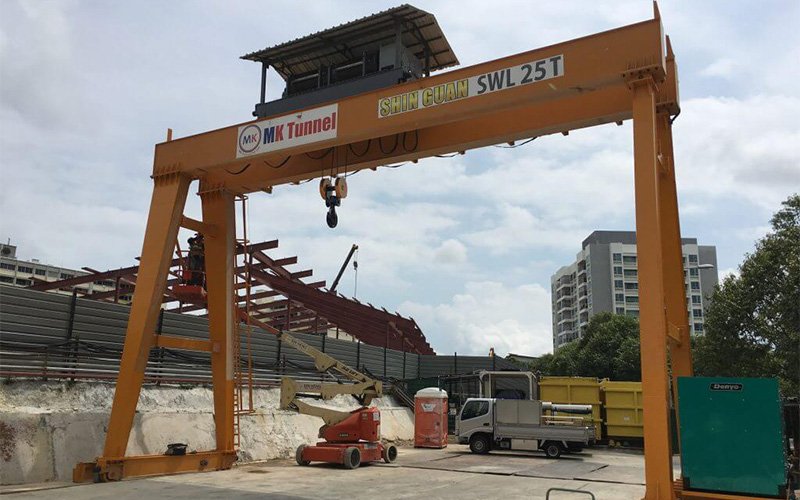
When these elements are planned properly, material movement becomes more direct and easier to control. A gantry crane may be suitable for certain workshops, open areas, or loading zones where building-mounted runway structures may not be practical. The right span and travel path help reduce unnecessary pauses, repeated transfers, and inefficient movement between different parts of the site.
How Custom Crane Systems Reduce Manual Handling
Manual handling increases when the lifting support does not reach the areas where heavy loads need to be moved. Workers may need to push, carry, drag, or reposition materials before the crane can take over. This can slow down work and create more coordination challenges around bulky or irregular loads.
A planned crane setup reduces these extra steps by bringing lifting support closer to the actual work area. This improves handling control and reduces reliance on physical movement, especially for heavy, large, or frequently moved loads. It also helps operators position loads more accurately at machines, workstations, storage areas, or dispatch points.
How Better Crane Coverage Improves Handover Between Work Areas
Handover points are areas where materials move from one stage of work to another, such as from storage to production, production to assembly, or assembly to dispatch. When crane coverage does not align with these points, materials may wait longer, require extra transfers, or occupy valuable working space.
Better crane coverage allows loads to move more smoothly between teams, machines, and work zones. This reduces bottlenecks and helps each stage of the factory workflow continue with fewer interruptions. For facilities with repeated lifting tasks, this can reduce waiting time at transfer points and make daily coordination between work areas more predictable.
Why Custom Crane Planning Matters in Singapore Facilities
Many industrial facilities in Singapore operate within fixed building layouts, limited floor space, and specific production requirements. These conditions make crane planning more than a matter of lifting capacity alone. Businesses also need to consider lifting height, working radius, operator access, runway placement, structural support, maintenance access, and how often each load is moved.
Before confirming a crane setup, businesses should review the actual lifting points, obstruction areas, operating frequency, and access needed for servicing. These checks help ensure the system supports daily use without creating new space or safety constraints.
A custom crane system can account for available space, structural conditions, lifting height, load weight, and work sequence. This helps businesses create clearer lifting paths without forcing major changes to the entire facility layout. Instead of treating the crane as a standalone machine, proper planning connects lifting equipment to the way the site operates every day.
How Shin Guan Supports Custom Crane Systems for Material Flow
A well-planned custom crane system supports both efficiency and safety by creating clearer lifting paths, better load access, and more controlled movement across the facility. It helps businesses reduce unnecessary handling, improve handover between work areas, and keep daily lifting operations more consistent and efficient.
Shin Guan provides electric crane systems, hoists, and crane components for industrial lifting applications, including overhead cranes, gantry cranes, jib cranes, and monorail systems. With more than 25 years of experience in the crane and hoist industry, Shin Guan is an authorised distributor of CMAK Crane Systems and a crane company in Singapore that can customise crane and hoist systems to suit different building and operational requirements.
To plan a crane system around your site layout, lifting requirements, and daily movement routes, speak with our team for practical guidance on a setup that fits your facility’s operating needs.