


Why EOT Crane Enquiries Need Clear Technical Details
An Electric Overhead Travelling crane enquiry should never begin and end with “What capacity do you need?” Capacity matters, but we also need to understand what you are lifting, how it moves, how high it must travel, what supports the crane, how often it operates, what power is available, and what restrictions surround the work area.
For project managers, facility owners, engineers, and procurement teams, an EOT crane checklist turns a broad RFQ into a technical starting point. In Singapore, industrial units may combine tight floor space, active production, existing beams, limited ceiling height, shared access routes, and facility-management controls.
We use the enquiry stage to establish the main technical and operational details before design choices harden. A useful EOT crane checklist should cover the load profile, Safe Working Load (SWL), span, travel length, hook height, headroom, runway, duty, controls, power, environment, access, downtime limits, and supporting records.
We begin by understanding the load profile, including what you need to lift, its weight, dimensions, handling method, and operating frequency. From there, we assess the working area and building geometry to establish the required span, travel distance, lifting height, headroom, and any physical obstructions.
We then review the runway, power supply, and control arrangements, followed by the crane’s expected duty, environmental conditions, site access, and installation constraints. Bringing these details together helps us define the EOT crane requirements more accurately before moving into site assessment and technical proposal development.
Clear inputs reduce assumptions during quotation, site checks, drawings, and installation planning.
Key Takeaways
- A well-prepared enquiry should explain what needs to be lifted, where it needs to move, and how often the lifting equipment will be used.
- Building dimensions, available height, obstructions, existing structures, and access restrictions can affect what equipment arrangement is practical for the site.
- Electrical arrangements, controls, operating conditions, supporting drawings, and project constraints should be clarified early to reduce assumptions during quotation and site assessment.
- Giving suppliers consistent and complete project information helps engineering, procurement, and operations teams compare proposals based on technical suitability, not price alone.
EOT Crane Enquiry Checklist at a Glance
Use this as a pre-RFQ working reference to organise the technical and site details needed before quotation. Record what is confirmed, and mark any provisional details for site verification.
| Checklist Area | What To Prepare |
| Load And Duty | SWL, typical/max loads, attachments, dimensions, lift frequency. |
| Working Area | Span, travel, hook height, headroom, obstructions. |
| Runway | Existing/new runway, drawings, supports, visible condition. |
| Electrical | Voltage, phase, supply point, isolator, cable route. |
| Site | Environment, access, staging, shutdown constraints. |
| Records | Layouts, technical drawings, crane records, timeline, testing needs. |
Where a measurement, drawing or site condition is still provisional, note it clearly so it can be verified during the site assessment rather than carried into the quotation as an assumption.
Site and Lifting Details That Shape the EOT Crane Proposal
The crane has to work inside a real building, around real loads, and at the pace of your operation. We therefore treat site information and lifting information as connected inputs rather than separate forms to complete.
Load Information That Goes Beyond Maximum Weight
Maximum weight is only the first question. Two loads can weigh the same yet behave very differently because one is compact and balanced while the other is long, offset, fragile, or difficult to position. Our EOT crane checklist starts by separating rated capacity from actual load behaviour.
Safe Working Load and Typical Load Range
Tell us the required SWL, the heaviest expected load, and what the crane normally lifts. Include the weight of lifting beams, fixtures, hooks, slings, or frames forming part of the suspended load.
Useful inputs include:
- Required SWL
- Maximum and typical load weights
- Heaviest occasional lift
- Weight of lifting accessories
- Expected future load growth
- Lifts per hour or per shift
- Number of operating shifts
A crane lifting near its rating repeatedly has a different duty profile from one used heavily only occasionally. That affects motor duty, braking, wear, and hoist selection. An EOT crane checklist should record both capacity and frequency.
Load Size, Shape, and Centre of Gravity
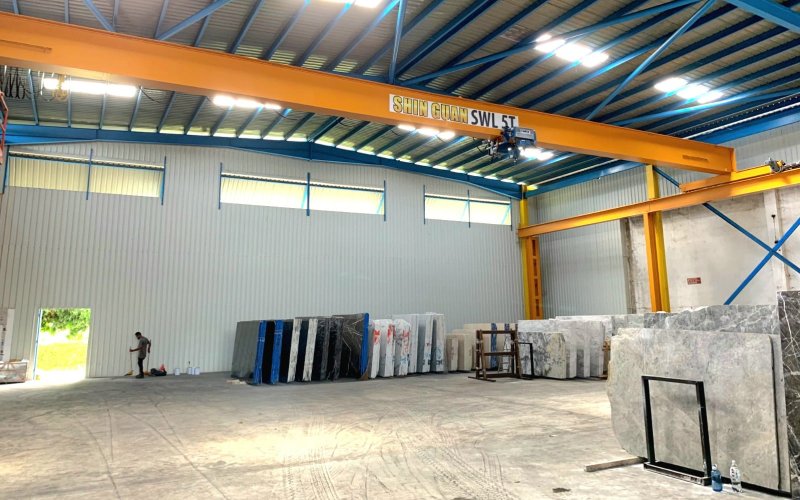
Length, width, height, and balance affect clearance and stability. A long steel section may conflict with columns or machines when rotated, while an offset centre of gravity can change the lifting arrangement. Tell us whether the lift is single-point or multi-point, whether the load can rotate, and whether alignment must be controlled.
Lifting Method and Handling Condition
Define the pick-up and drop-off points. Is the load taken from the floor, truck bed, machine bed, rack, or workbench? Does it need broad placement or accurate alignment? Slow approach, inching, variable speed, or steady holding may influence the control strategy and the type of electric crane hoist selected.
Duty Classification and Operating Demand
Duty is about how hard the crane works over time. We look at operating hours, starts per hour, typical load, travel frequency, repetitive cycles, and whether use is spread across one shift or several.
A production crane working through the day should not be specified as a maintenance crane used occasionally. If output is expected to rise, tell us so future cycle demand can be considered.
Building Dimensions, Crane Coverage, and Site Layout Details
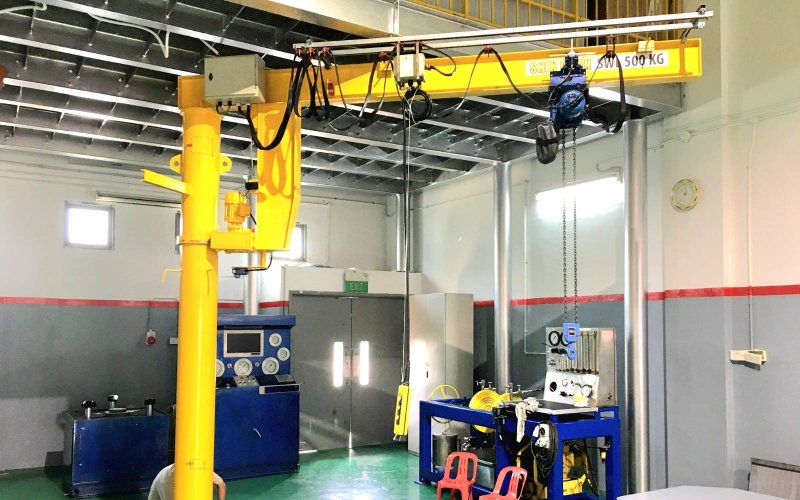
The building defines the working envelope. The dimensions recorded in our EOT crane checklist help us assess whether the requested coverage, hook height, and travel path are realistic.
Span, Bay Width, and Travel Distance
Crane span is tied to the runway arrangement, while travel length defines how far the bridge moves along the bay. A reliable crane span measurement should come from verified site information or suitable drawings, not a rough wall-to-wall estimate.
We want to know the bay width, required span, travel length, pick-up and drop-off zones, workstations served, restricted areas, and possible future extensions. A crane serving one machine cell differs from one supporting an entire fabrication bay. The EOT crane checklist should show actual work zones so coverage can be assessed against material flow rather than empty floor area.
Lifting Height, Hook Height, and Headroom
Ceiling height does not tell us usable hook height. We need the lowest obstruction, required hook position, load height, and anything the load must clear. Provide lifting height details that show where the hook starts and finishes. Low headroom can influence girder arrangement, hoist position, and usable lifting space.
Obstacles, Work Zones, and Internal Movement Restrictions
Mark fixed machines, racking, mezzanines, columns, walkways, forklift routes, loading bays, existing cranes, ducting, sprinklers, lighting, and cable trays. A bridge may cover the bay geometrically while the suspended load still has no practical path through it.
Power distribution may also need to be coordinated with overhead crane festoon systems or another suitable arrangement because cable travel and maintenance access occupy physical space.
Environmental and Site Condition Details
Tell us whether the crane will operate indoors, semi-outdoors, or in a humid, dusty, hot, corrosive, marine-related, or fabrication environment. Process heat, fumes, washdown, particles, or salt exposure may change protection and maintenance needs.
Runway, Power Supply, Controls, and Documentation Requirements
A bridge and hoist cannot be assessed in isolation. The EOT crane checklist also has to establish what supports the crane, how it is powered, how the operator controls it, and what project information is available before site work begins.
Existing Runway or New Runway Requirement
Existing runway beams should not be assumed suitable for a new crane. Record their length, previous capacity if known, supports, drawings, alignment history, and visible condition. The runway beam condition should be documented, and a professional structural review may be needed before reuse is confirmed.
For a new runway, identify landlord constraints, structural coordination needs, and modification limits. In JTC-managed premises, account for the approval path for fitting-out and renovation works before physical works commence.
Electrical Supply and Power Arrangement
Provide the available voltage and phase, nearest electrical source, isolator location, cable-routing constraints, and distance to the runway. The crane power supply must be coordinated with the motors, controls, and site electrical capacity rather than left as an installation-stage assumption.
If your facility has other high-demand equipment, flag it. Electrical coordination may affect contractor interfaces and commissioning.
Control and Safety Feature Requirements
Tell us how the operator is expected to work and where visibility changes along the bay. Raise needs for emergency stops, hoist and travel limits, overload protection, anti-collision functions, and precise movement at the enquiry stage.
Where the operating area affects escape routes, fire-safety provisions, or fixed building services, the project team should also check relevant factory fire-safety requirements as part of wider facility coordination.
Documents, Records, and Internal Requirements
Useful records include building layouts, structural drawings, previous crane information, electrical data, load data, internal safety requirements, project schedules, access rules, and testing expectations.
They do not replace a site visit. For crane installation in an active factory, they can expose permit needs, staging space, and downtime constraints early. A complete EOT crane checklist also shows what still requires site verification.
How Prepared Enquiry Details Help Shin Guan Recommend the Right EOT Crane System
Once the enquiry is technically useful, we can move beyond a generic capacity-and-price discussion. We bring more than 25 years of crane and hoist experience, authorised CMAK Crane Systems distribution, and the ability to customise systems around customer buildings and operations.
Matching Crane Type, Hoist Configuration, and Components to the Actual Site
Our EOT crane checklist helps us look at the lifting system as a whole: bridge, hoist, end carriages, motors, brakes, wheels, controls, electrification, runway interface, and operating environment.
Single Girder or Double Girder Suitability
The single-girder versus double-girder decision should follow the load, span, hook height, duty, headroom, and structural context. One arrangement may suit moderate industrial use, while another may be better for higher capacity, longer spans, demanding duty, or a different hook-height requirement.
That is why the EOT crane checklist should contain verified geometry and operating demand before crane type is treated as fixed.
Hoist Selection Based on Load, Height, and Duty
Hoist selection depends on capacity, lift height, speed, duty, control precision, headroom, maintenance access, and environmental exposure. A hoist may lift the load yet still be a poor fit if it reduces usable hook height or is mismatched to repetitive duty.
Component Quality and System Compatibility
Reliable performance depends on compatible crane components, not just visible steelwork. Motors, brakes, wheels, controls, electrical systems, and hoist equipment must work as one system. Shin Guan is an authorised distributor of CMAK Crane Systems.
Customising the Crane Around Singapore Facility Constraints
Customisation becomes practical when the building cannot simply be changed to suit a standard crane. Our EOT crane checklist gives us the detail needed to adapt span, hoist arrangement, controls, electrification, runway coordination, and installation planning to the site.
Compact Factory Layouts and Limited Headroom
We look at the lowest obstruction, not just nominal ceiling height. Ducting, lighting, beams, sprinklers, mezzanines, and machine envelopes can reduce the usable space above the load.
The crane still has to provide useful hook height, maintenance access, and movement after it is fitted into that envelope. The EOT crane checklist makes those trade-offs visible early.
Existing Operations and Downtime Planning
Many Singapore facilities cannot stop production for crane works. We ask about delivery access, staging areas, work permits, testing windows, and zones that must remain operational.
When comparing an overhead crane supplier in Singapore, assess how the proposed system will enter the site, be assembled, tested, and handed over around ongoing operations, alongside its equipment specification and price.
New Facility, Expansion, or Replacement Context
A new facility allows runway, power, access, and work zones to be coordinated with building design. An expansion must fit existing production. A replacement may require review of the previous crane, runway, operating problems, and changed loads.
Tell us which context applies because it changes what can be planned in advance and what must be verified on site.
Turning the Enquiry Checklist into a More Accurate Quotation and Site Assessment
A detailed EOT crane checklist does not replace engineering assessment. It gives us a stronger base for deciding what must be verified, what can be priced with confidence, and where a quotation still needs qualifications.
Fewer Assumptions During Quotation
Missing span, duty, hook height, runway, power, or load information forces assumptions into the quotation. Those assumptions can later change scope, price, lead time, or installation planning.
With the right inputs, we can identify whether a site visit, structural review, special control arrangement, or custom system is likely to be needed. The EOT crane checklist gives that technical discussion a clearer basis before commercial comparison starts.
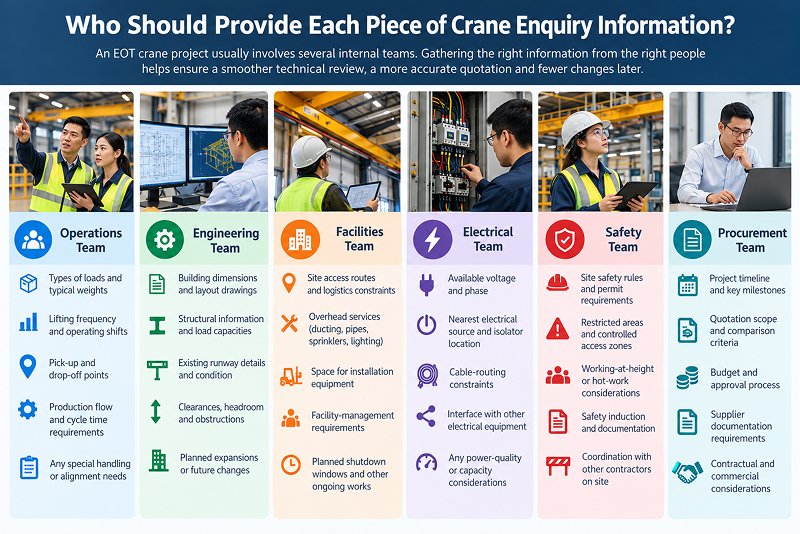
Better Alignment Between Procurement, Engineering, and Operations
Procurement, engineering, operations, and safety teams often prioritise different issues. One shared enquiry record gives them a common reference and makes conflicts easier to resolve against operating needs and site constraints.
Stronger Basis for Comparing EOT Crane Quotations
Quotations are easier to compare when suppliers receive the same inputs. Otherwise, one proposal may include structural coordination, controls, or customisation that another has assumed away. Compare capacity, duty, span, hook height, runway assumptions, controls, electrical scope, testing, exclusions, and site-specific work.
Clearer Scope Before Site Visit and Final Recommendation
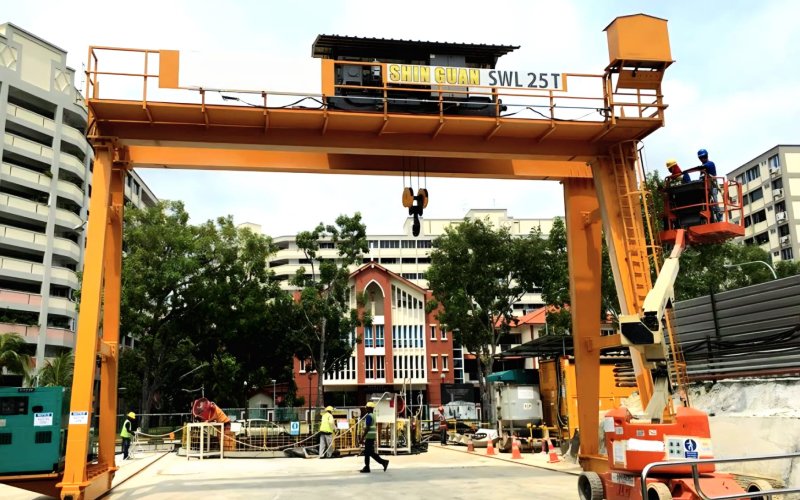
Before the visit, send the load profile, work area, travel path, headroom information, runway records, electrical details, access constraints, and drawings. That lets us use the visit for confirmation and problem-solving rather than basic fact collection.
Conclusion
Use the EOT crane checklist before you issue an RFQ, not after quotations arrive. Bring your engineering, operations, facilities, safety, and procurement stakeholders into the same discussion early enough to confirm the lifting task and building constraints.
A completed EOT crane checklist, supported by drawings, load data, required coverage, available power details, and your target timeline, gives the technical team a stronger basis for identifying what can be assessed immediately and what still needs confirmation during a site visit.
About Shin Guan
Shin Guan is a professional engineering company specialising in electric crane systems and components. Our experience spans more than 25 years in the crane and hoist industry, supported by authorised CMAK Crane Systems distribution, customisable crane and hoist systems, and servicing for a wide range of brands. For customers, these capabilities support more practical site planning, a crane configuration matched to building and operating constraints, and servicing support beyond the initial project.
If you are preparing an EOT crane project, contact our team with your site drawings, load information, working-area requirements, and project timeline so we can discuss a suitable crane and hoist solution for your facility.
Questions You Might Ask
Project teams often have timing, planning, and quotation questions before enough information is available for a final technical recommendation. These are the issues worth resolving early.
1. How early should project teams enquire about an EOT crane?
Start once the lifting task, work area, and project timeline are reasonably clear. Completing the checklist at that stage can expose headroom, runway, access, or electrical questions before procurement or renovation decisions become difficult to change.
2. Can an EOT crane be planned before a new facility is completed?
Yes. An EOT crane checklist is useful during design because runway provision, span, working zones, hook height, and electrical interfaces can be considered before the layout is fixed.
3. What causes delays in an EOT crane quotation?
Missing load data, uncertain dimensions, unavailable drawings, unclear runway information, and incomplete electrical details are common causes. A complete EOT crane checklist lets us identify what is known and what still needs site verification.
4. Can one EOT crane serve multiple work zones?
Possibly. The decision depends on span, travel length, pick-up and drop-off points, obstructions, and movement path. Use the EOT crane checklist to map those zones before assuming one bridge can serve them efficiently.
5. Is the cheapest EOT crane quotation always suitable?
Not necessarily. Compare duty, capacity, hook height, runway assumptions, controls, component quality, electrical scope, testing, exclusions, and service support. A lower price is meaningful only when the proposals solve the same requirement.