


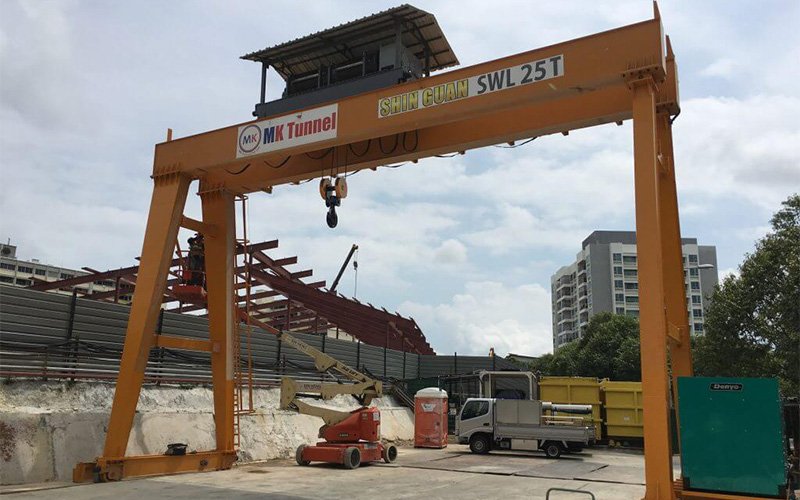
Key Takeaways
- Choosing the right lifting system requires more than checking the maximum load rating; load shape, balance, movement path, and lifting conditions all matter.
- Lifting frequency, travel distance, and hook height should be reviewed early because they affect equipment performance, wear, usability, and daily workflow.
- Site layout and building conditions must be assessed before equipment selection to avoid installation issues, movement restrictions, or unsafe operating conditions.
- Both under-specifying and over-specifying a system can create problems, from safety risks and downtime to unnecessary costs and reduced site efficiency.
Introduction
Crane capacity planning is not about choosing the highest possible load rating and assuming the site can handle it. For industrial facilities in Singapore, the right crane setup must match the actual load, lifting pattern, building structure, work area, and daily operating conditions.
A crane that is too small may force operators to work too close to its limit. A crane that is too large may require heavier support structures, higher installation costs, and more space than the operation needs. The practical goal is to specify a system that can lift safely, move efficiently, and fit the facility without overloading the site.
What Crane Capacity Really Means in Industrial Lifting
In industrial lifting, capacity refers to the maximum load a crane system is designed to handle safely under specific operating conditions. However, that figure does not tell the whole story. The weight of the load matters, but so do its shape, balance, centre of gravity, lifting points, and method of attachment.
Two items with the same weight can behave very differently during lifting. A compact motor, a long steel beam, and an uneven fabrication assembly may all place different demands on the crane system. One may lift vertically with little movement. Another may sway, rotate, or require a spreader beam to maintain control.
This is why capacity planning should reflect real lifting conditions, not only the heaviest load on a specification sheet. The plan should also consider the safe working load of the crane, hoist, slings, hooks, and related lifting accessories as a complete system. Where applicable, rated capacity should also be checked against manufacturer specifications, crane configuration, hoist rating, and the accessories included in the lift.
Why Load Type Changes Capacity Requirements
The load type affects how much control, stability, and clearance the crane system needs. Long, wide, irregular, fragile, or off-centre loads require more careful handling than standard compact loads.
For example, a workshop handling steel sections may need stable horizontal movement across a bay. A fabrication facility may need to lift assemblies with uneven weight distribution. A plant maintenance team may need to remove machinery parts from tight spaces where access is limited.
The lifting equipment must be selected based on more than the stated load weight. It must also manage how the load behaves when it is raised, moved, lowered, and positioned. This includes checking whether the lifting points are suitable, whether the load may swing during travel, and whether operators have enough clearance to move it safely through the work area.
For buyers assessing lifting requirements, the question should not be “What is the heaviest item we lift?” alone. A better question is “What are the most difficult loads we need to control safely?”
How Lifting Frequency Affects Crane Capacity Planning
A crane used once a week for maintenance does not face the same operating demands as a crane used throughout the day in fabrication, production, warehousing, or assembly work. Lifting frequency affects wear on the hoist, motor, brakes, trolley, controls, wheels, and structural components.
If a crane is correctly rated for weight but not suitable for the frequency of use, the system may experience premature wear. Operators may also face slower lifting cycles, higher maintenance needs, and reduced equipment availability.
The planning process should therefore include the number of lifts per day, the typical load range, the length of each operating cycle, and whether the crane is used in light, moderate, or intensive service. A facility that lifts medium loads repeatedly may need a more robust system than one that lifts a heavier load only occasionally.
This is especially relevant for plant managers planning around production schedules. A crane must support the workload consistently, not only pass a single load rating check.
Why Lifting Height and Travel Distance Matter
Lifting height affects how much vertical movement the crane must provide. Travel distance affects how far the load must move across the facility. Both factors influence hoist selection, crane configuration, control requirements, and building design.
A site that only needs localised lifting around one workstation may not need the same system as a facility moving loads across multiple work zones. Longer travel distances can increase the need for smoother motion control, especially when loads pass near machinery, storage racks, pedestrian routes, or shared production areas.
Lifting height also affects usability. Too little hook height may make it difficult to raise loads over equipment or place them accurately. Too much unused height may add unnecessary complexity if the work area does not require it.
Mapping the Load Movement Path
A simple movement map can help decision-makers see whether the crane arrangement matches the actual work area before equipment is specified.
For facilities reviewing their lifting requirements, it is useful to identify:
- where loads are picked up;
- how high they need to be lifted;
- how far they need to travel;
- where they need to be placed; and
- whether they pass near machinery, workers, storage racks, or access routes.
This process helps confirm whether a standard crane arrangement is sufficient or whether another configuration would provide safer, more practical load movement across the work area.
How Site Layout Affects Safe Lifting Operations
The layout of the facility determines how lifting capacity is used in real operations. Floor space, columns, machinery, loading bays, access routes, workstations, and storage areas all affect how safely a crane can lift and move loads.
In Singapore, many industrial facilities operate within compact or already developed spaces. A crane system may need to work around existing equipment, limited headroom, or fixed building columns. In such cases, planning must account for both lifting coverage and movement restrictions.
An overhead crane may be suitable where loads need to move across a larger bay, while other setups may be more appropriate for localised lifting or linear movement. The best configuration depends on how the facility is used, not only on the maximum load weight.
A practical site review should identify possible obstructions, turning limitations, loading points, and areas where workers or equipment may share space with crane operations. This reduces the risk of specifying a system that looks suitable on paper but creates workflow issues after installation.
Why Structural Support Must Be Assessed Early
A crane depends on the structure supporting it. Runway beams, columns, foundations, brackets, and building support points must be able to handle forces created during lifting and travel.
A crane with a suitable load rating still requires a properly designed support system to operate safely. If the building or support structure cannot carry the intended loads, the system may need a different configuration, additional supporting works, or a more suitable lifting approach.
This assessment should be carried out early. If structural limits are discovered only after equipment selection, the project may face redesign work, installation delays, or higher costs. It may also result in a crane system that cannot be used as intended.
For existing facilities, early checks are particularly important because the building may not have been designed around the new lifting load. The crane, supporting structure, and facility must be assessed as one working system.
The Risks of Under-Specifying Crane Capacity
An under-specified crane may be able to lift some loads, but struggle with the actual demands of daily operations. This can increase strain on key components and reduce the margin available for safe handling.
Operators may also become tempted to work too close to equipment limits, especially when production pressure is high. That creates avoidable risk. It can also slow work down, as loads may need to be split, repositioned, or handled with additional equipment.
Under-specification can limit future flexibility. If the business later handles heavier parts, larger assemblies, or more frequent lifts, the crane system may no longer support operational needs. This can lead to modification costs, downtime, or early replacement.
For industrial buyers, the lowest initial specification is not always the most cost-effective choice. It should be assessed against actual workload, expected usage, and the practical cost of disruption.
The Risks of Over-Specifying Crane Capacity
Over-specifying can be just as problematic. A crane with more capacity than needed may require heavier beams, larger components, stronger supports, and more complex installation work.
In some facilities, an oversized system may reduce available headroom or make structural planning more difficult. It may also increase cost without improving day-to-day productivity if the extra capacity is rarely used.
The most suitable system is not always the largest one. It is the system that matches the load, frequency, travel route, building limits, and workflow. A realistic capacity plan helps avoid paying for unnecessary strength while still allowing the crane to operate with an appropriate safety margin.
This is where technical review matters. A reliable crane supplier in Singapore should be able to discuss actual operating conditions, not only quote based on a requested tonnage.
How the Right Specification Supports Safer Operations
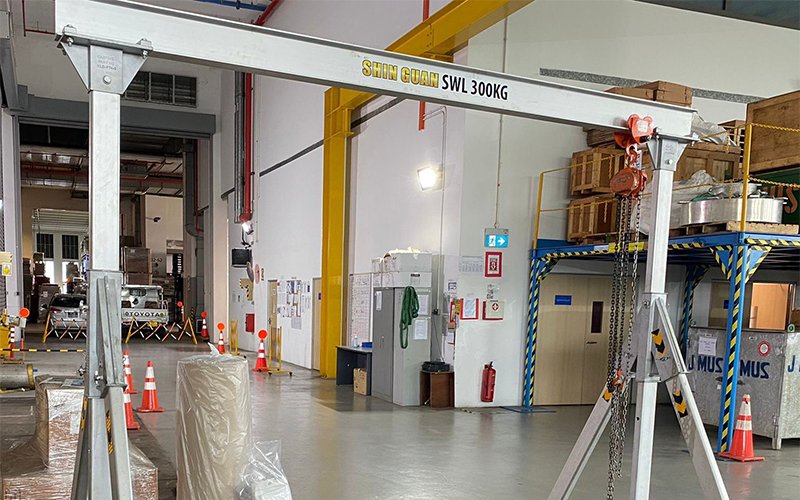
Proper capacity planning creates a clearer match between the crane system and the work it must perform. It helps reduce overloading risks, improves load control, and supports more consistent daily lifting.
It also helps decision-makers understand the relationship between load weight, lifting frequency, travel distance, site layout, and building limits. These factors should not be reviewed separately because they affect one another during actual operation.
For example, a heavier load moving across a short, clear bay may be simpler to manage than a lighter but awkwardly shaped load moving through a congested production area. Capacity planning helps identify these differences before the crane is specified.
It also supports maintenance planning. A system selected for the correct duty and operating conditions is less likely to be pushed beyond its intended use. This can reduce avoidable strain on hoists, brakes, motors, controls, and supporting components.
How Shin Guan Supports Practical Crane Capacity Planning
Shin Guan specialises in high-quality electric crane systems and components for industrial lifting applications. As an authorised distributor of CMAK Crane Systems, we work with crane and hoist technology produced for demanding industrial use, with systems that can be configured according to building and operational requirements.
This matters during capacity planning because different sites do not need the same lifting arrangement. A production bay, maintenance area, fabrication workshop, and storage facility may each require a different approach to crane type, hoist selection, control, travel distance, and installation constraints.
Our experience covers overhead cranes, gantry cranes, jib cranes, monorail systems, and hoists, allowing capacity decisions to be reviewed against both lifting performance and site practicality. Instead of focusing only on the highest load rating, the planning process can consider how the system will actually be used inside the facility.
A well-planned crane system helps industrial businesses avoid unnecessary risk, excessive cost, and unsuitable lifting performance. Before specifying equipment, confirm how the crane will be used, what the site can support, and where the load must move.
If your facility is planning a new crane system or reviewing an existing setup, speak with us to assess your lifting requirements, site constraints, and suitable crane configuration options before selecting your equipment.