


Key Takeaways
- One-beam and two-beam systems serve different lifting requirements, depending on load weight, working area, and site conditions.
- The right configuration should match the facility’s building clearance, support structure, operating frequency, and future handling needs.
- Heavier loads, wider work areas, and greater vertical reach may require a stronger two-beam setup for stable daily operation.
- Proper planning helps industrial facilities avoid over-specifying, under-specifying, or installing a system that limits safe and efficient material handling.
Introduction
Choosing between a single girder crane and a double girder crane is a practical engineering decision that affects more than the initial equipment cost. For industrial facilities in Singapore, the right girder configuration can influence load handling, building clearance, installation requirements, maintenance access, and long-term operational safety.
Both crane types are used for overhead lifting, but they are not suited to the same site conditions. A compact workshop with moderate loads may not need the same crane structure as a fabrication plant handling heavier materials across a wider bay. Understanding the difference helps plant managers, engineers, and industrial buyers avoid overbuilding a system that is more complex than necessary, or under-specifying a crane that cannot support daily lifting requirements safely.
What Is a Single Girder System?
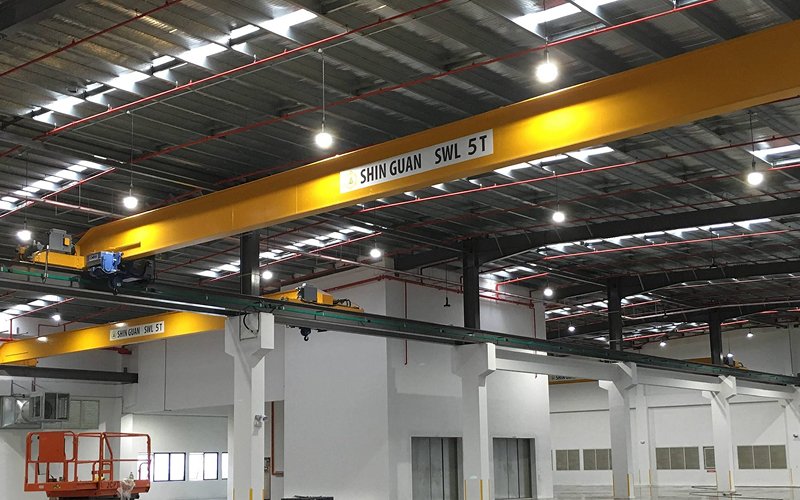
A single girder crane uses one main bridge beam to support the hoist and trolley movement. The hoist usually travels along the lower section of the main beam, which keeps the crane design relatively compact and suitable for facilities where space efficiency matters.
This configuration is commonly considered for moderate lifting needs, shorter spans, and indoor layouts with clear but limited working areas. It can support workshops, warehouses, maintenance bays, and production spaces that need dependable overhead lifting without unnecessary structural weight or design complexity.
What Is a Double Girder Crane?
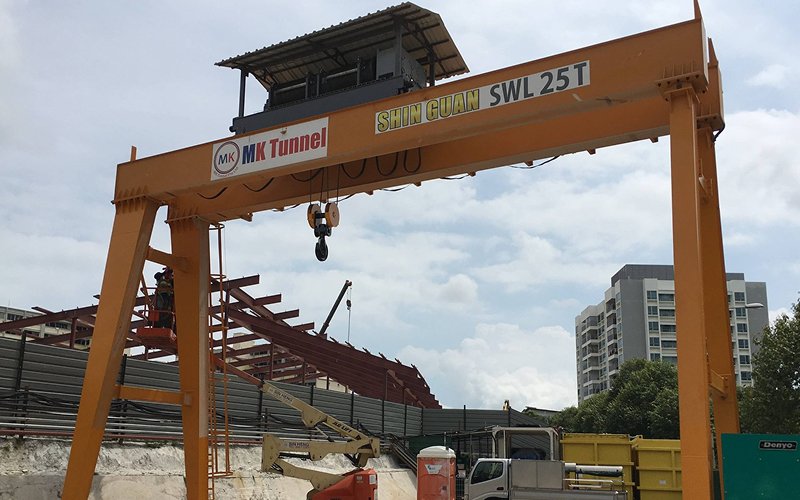
A double girder crane uses two main bridge beams to support the lifting system. This gives the crane a stronger structural capacity and allows more flexibility in how the trolley and hoist are arranged.
This configuration is often selected for heavier loads, wider working areas, and operations that require higher hook travel. It may also be more suitable for facilities where lifting tasks are frequent, loads are large, or the crane must support demanding production schedules over a longer period.
How Girder Structure Affects Crane Performance
The main difference between the two systems lies in the overhead crane structure. A single-girder setup uses one main beam, while a double-girder setup distributes the load across two bridge beams.
This structural difference affects how the crane performs under load, how much headroom remains available, and how the trolley moves across the working area. It also influences the hook approach, support requirements, and maintenance access. For businesses reviewing an EOT crane system, the girder configuration should match the actual load profile, building layout, and operating frequency instead of being selected based on capacity alone.
How Load Range Influences the Right Girder Choice
Load range is one of the most important factors when choosing between single and double girder configurations. A single girder crane may be suitable for lighter to moderate lifting operations where the load does not require a heavier bridge structure.
A double girder crane may be more practical when heavier loads need to be lifted regularly. It provides stronger structural support for demanding industrial use, especially when load weight, load size, and lifting frequency place greater stress on the system. This is important because an under-specified crane may lead to higher wear, reduced efficiency, and safety concerns over time.
How Span Changes the Design Requirement
Crane span refers to the horizontal distance the crane needs to cover across the working area. In a smaller bay or moderate-width facility, a single-girder configuration may be sufficient if the load capacity, runway support, and building structure are within suitable limits.
For wider work areas, a double-girder configuration may provide better support and movement stability. This is especially relevant in larger Singapore industrial facilities where the crane must cover broad production zones, storage areas, or fabrication spaces. Wider coverage requires careful review of deflection, runway support, end carriage movement, and safe load control.
How Hook Height Affects Single and Double Girder Selection
Lifting height can influence whether a single or double girder system is more suitable. A single-girder setup may have more limitations when maximum hook height is critical, depending on the hoist arrangement and available headroom.
A double-girder system can sometimes provide a better hook approach because the hoist and trolley can be positioned to improve usable vertical space. This matters in facilities handling tall loads, large assemblies, or equipment that must be lifted from deeper positions. The selected overhead crane hoist should also match the required hook travel, rated load, and maintenance needs.
When a Single Girder Crane May Be Suitable
A single girder crane may be suitable for facilities with moderate loads, shorter spans, and straightforward lifting routes. It can support daily material handling in workshops, warehouses, maintenance areas, and light to medium production environments.
It may also be practical for Singapore facilities working within existing building constraints. Where roof height, column layout, and runway support limit major structural changes, a compact crane design can help businesses improve lifting efficiency without overcomplicating the setup. The key is to confirm that the capacity, span, hook height, and usage frequency are all within suitable design limits.
When a Double Girder Crane May Be More Practical
A double girder crane may be more practical for heavier loads, wider spans, and applications that require greater hook height. It is often considered when the crane must support more intensive lifting work or when the facility needs stronger structural capacity for long-term use.
This configuration may also suit heavy engineering, manufacturing, steel handling, marine-related work, and similar industrial applications. In these settings, the crane may need to lift larger materials repeatedly, travel across wider bays, or operate under more demanding production conditions. A double girder design can provide the added support needed for stable and efficient lifting.
Why Building Conditions Matter in Girder Configuration
The final girder choice depends not only on the load, but also on the building itself. Roof height, runway beams, column spacing, structural capacity, access routes, and installation space all affect whether a single or double girder crane can be installed safely.
This is particularly important in Singapore, where many industrial facilities operate within existing buildings rather than purpose-built crane halls. A crane system must fit the site safely while still providing enough coverage, hook travel, and movement control. Before confirming the design, businesses should review both current lifting needs and possible future requirements.
For facilities with limited headroom, unusual column spacing, or changing production needs, reviewing the crane layout early can help prevent unsuitable specifications from being finalised.
How Shin Guan Supports Practical Girder Configuration Planning
The right girder configuration should balance lifting performance, building conditions, safety, cost efficiency, and long-term usability. A crane should not only meet the rated load on paper, but also fit the actual working environment, movement path, and maintenance requirements of the facility.
Matching the Crane to Site and Operating Requirements
This planning stage helps connect the technical crane design with how the facility actually operates each day. Shin Guan supports girder configuration planning by reviewing how the crane needs to fit both the building and the operation.
This includes available headroom, runway support, working area width, load weight, lifting frequency, hook travel, and future usage needs. This assessment should be based on actual site measurements, operating routes, load characteristics, and available structural support, rather than capacity requirements alone.
As an authorised distributor of CMAK Crane Systems, Shin Guan can also support projects that require quality crane components and customised crane and hoist systems for specific building and operational requirements. By matching these factors to the right crane design, businesses can avoid choosing a system that is too limited for daily work or unnecessarily complex for the facility.
Conclusion
The best crane configuration is the one that fits the actual lifting environment. A single-girder system may be enough for moderate lifting needs, compact layouts, and shorter spans, while a double-girder system may be more suitable for heavier loads, longer spans, and higher lifting requirements. The final decision should consider how the crane will be used, what the building can support, and whether the system can remain safe and practical over time.
Shin Guan supports industrial lifting needs in Singapore with electric overhead travelling crane systems, hoists, and crane components that can be customised to building and operational requirements. With more than 25 years of experience in the crane and hoist industry, we bring a practical understanding of site constraints, equipment requirements, and long-term usability. As an overhead crane supplier, we also help businesses select a suitable configuration that supports safe operation, reliable performance, and consistent daily lifting.
For facilities planning a new crane system or reviewing an existing lifting setup, the next step is to confirm how the crane must fit the site, load profile, hook height, and daily operating conditions. Speak to us to discuss a suitable girder configuration that supports stable performance, practical installation, and reliable daily lifting.